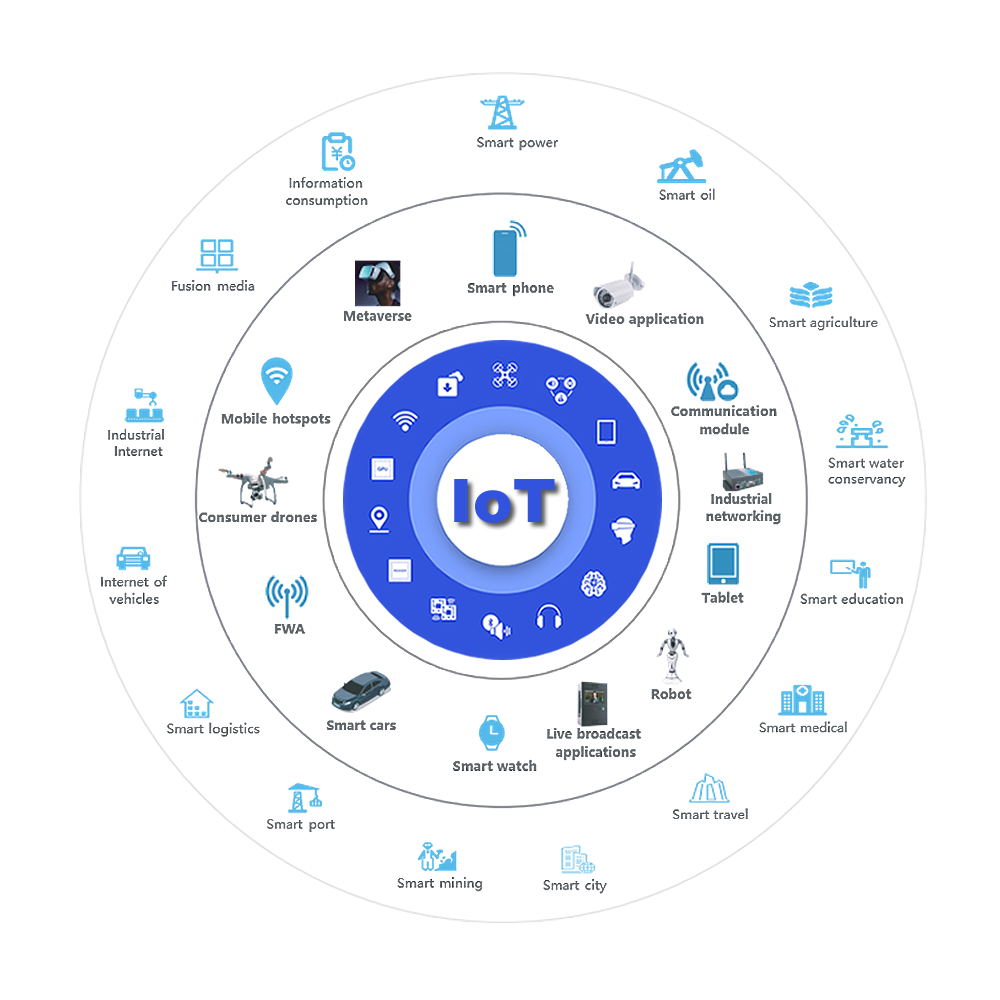


The Internet of Things (IoT) refers to a vast network formed by combining various devices and technologies such as information sensors, RFID, and GPS to collect real-time data on any object or process that needs monitoring, connection, and interaction, and integrating this data with the internet.
Its core concept is “interconnection of everything,” enabling inanimate objects to “speak” and work collaboratively.
The four-layer technical architecture of the IoT: A complete IoT system typically includes the following four core layers:
Sensing Layer (Eyes and Ears): Responsible for data collection. Includes various sensors (temperature, pressure, cameras), RFID tags, GPS, etc.
Network Layer (Nervous System): Responsible for data transmission. Includes cellular networks (5G/4G, NB-IoT), wired networks, and short-range wireless communication (Wi-Fi, Bluetooth, Zigbee), etc.
Platform Layer (Central Brain): Responsible for data processing and management. Examples include IoT cloud platforms (AWS IoT, Alibaba Cloud IoT, etc.) for device management, data analysis, and security authentication.
Application Layer (Executive Organs): Responsible for the final business presentation. This refers to the various intelligent scenarios and software that users directly interact with.